
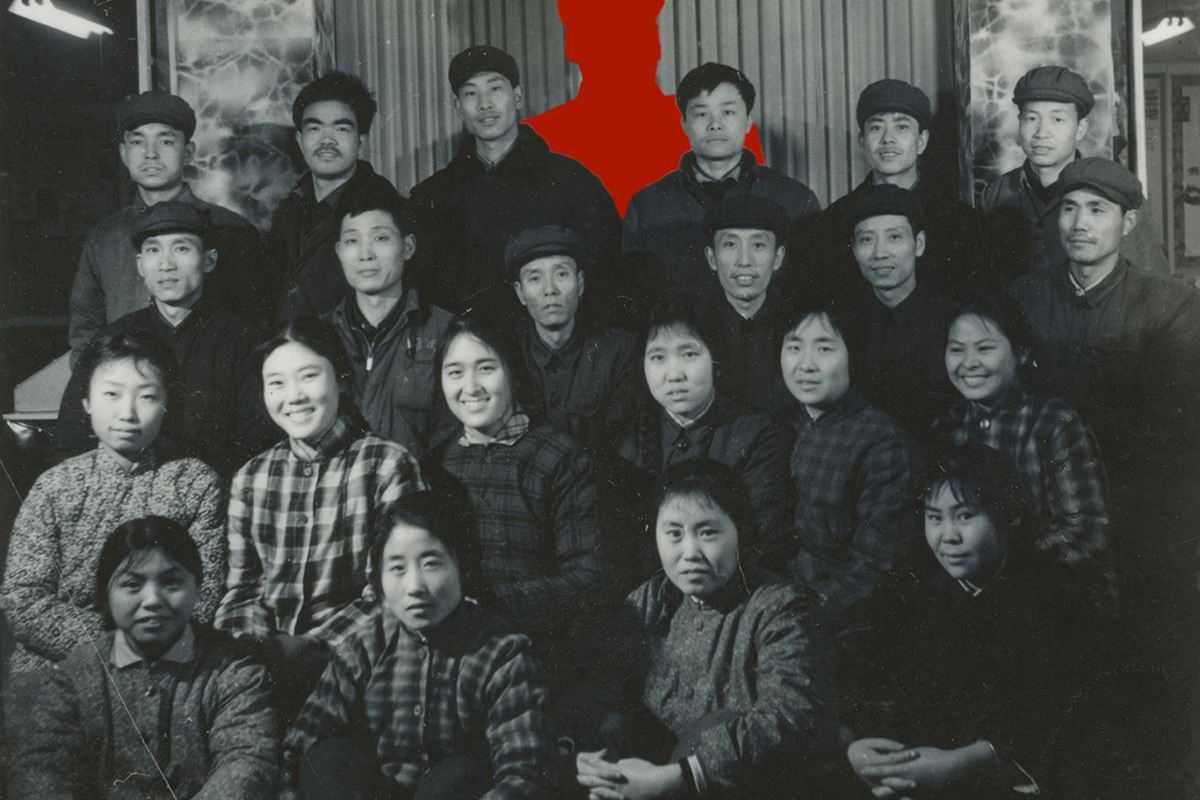
I met Sheila Zhao at the 2017 Mt.Rokko International Photo Festival in Kobe, Japan and discovered her exhibited series The East Was Red for the first time. This series comprises of scanned vintage black and white photographs she collected in China depicting mainly the youth of the period during Mao’s reign, in various formal and semi-formal poses.
Each photograph has a patch of ‘communist’ red purposefully hiding propaganda symbols and objects used as props in the making of the original photographs, which presumably, was the intention of the photographer at the time. These found photographs could be dated to the 50s – 70s during the height of Communist Party’s control.
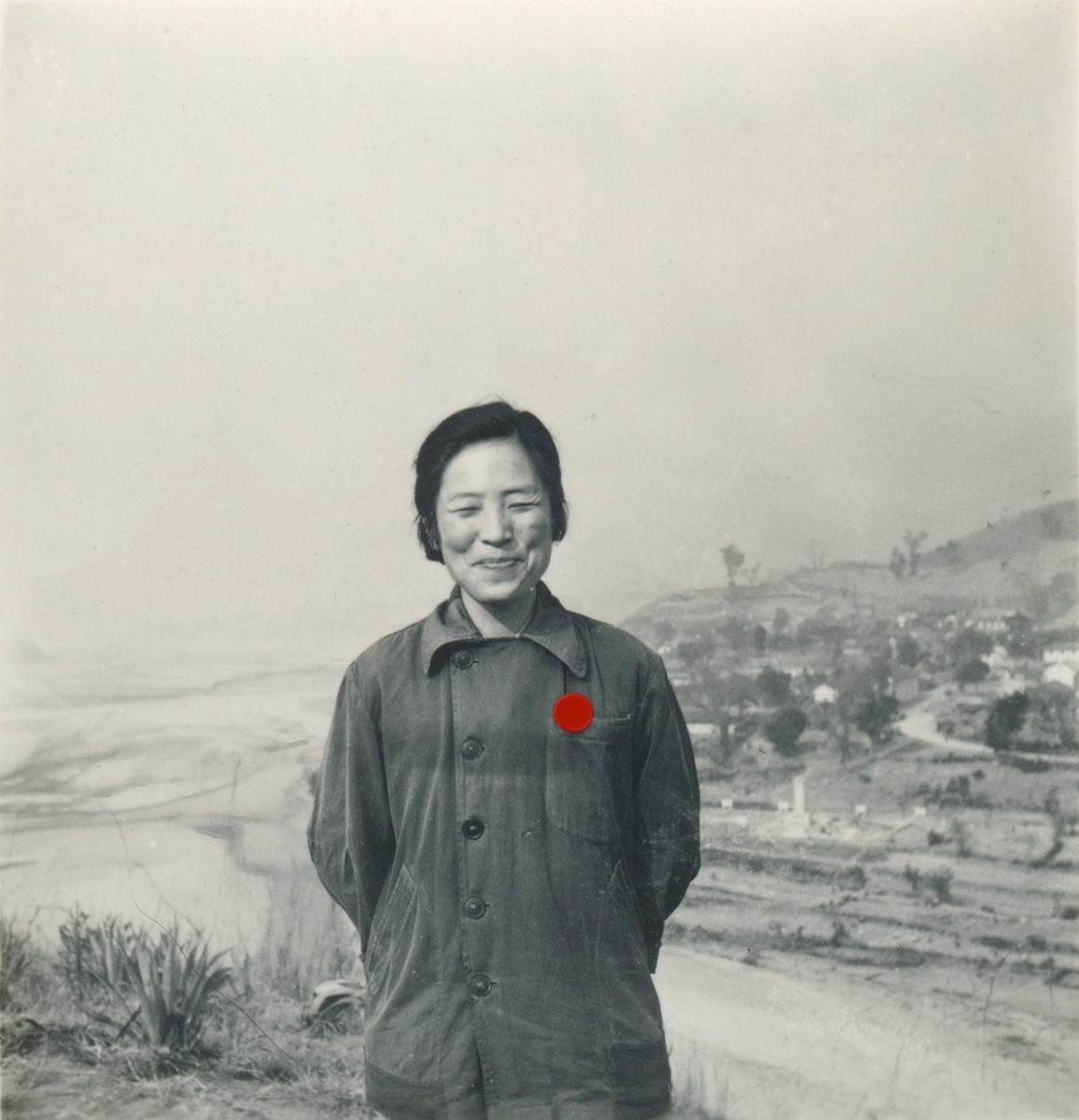


I found the work intriguing and steep in historical commentary, nuanced interpretation and concepts, and posed a few questions to her.
Q. What did you major in at Indiana University?
SZ. Journalism with a minor in anthropology.
Q. How or what made you go into photography the way you did?
SZ. I entered photography rather recklessly. I was interested in the arts in secondary school, but never pursued it in university, apart from a weeklong photography course in a media class. I bought a camera post graduation and was photographing during holidays I got from my public relations agency job. That’s where my love and interest for photography took root. I wasn’t cut out for a PR job in that capacity, and when I decided to find a new career, I looked towards photography.
Q. Your earlier photographs have a certain dream-like aesthetic to them (apart from Last Days). Did this come about accidentally or intentional?
SZ.The aesthetic initially came organically. I wasn’t intentionally trying to force myself to photograph in any certain way. However, once I recognised that this type of aesthetic came more naturally, I tried to focus on it and use it as a component to my photography.
Q. Coming to The East Was Red work, what was the source of inspiration for this series and, in terms of found photography, can you see this developing further, (perhaps a Soviet Union project?) or is this project dependent on the expansion of your collection.
SZ. The East Was Red was started after I began collecting found photographs from China. I would buy these photographs, usually originating from family albums, from vintage dealers in Shanghai and Beijing. I wanted to share the more interesting finds with a broader public – to make sure they wouldn’t be lost again – and thus began posting them on Instagram under the handle @chinalostandfound.
As my collection grew, I began noticing a pattern in photographs from the Cultural Revolution era in China, of what seemed like an enthusiastic incorporation of propaganda and the articulation of a certain mindset. It was from there that I decided to impose my own artistic interpretation. As for further development of this series, I certainly plan on continuing to collect found photographs as long as I remain in China. As for The East Was Red, there are still a few certain things that I’m looking out for that I think can better round out this work. However, at the moment I am only comfortable to make this kind of work about China, due to my personal affiliation with the country, as well as my family’s connection with it.
Q. The narrative of this series is simplistic to a post Mao viewer perhaps, but what about the older Chinese population? Have you thought about their response to this series? The ideas and topics of censorship, state apparatus, & symbolism plays deeply in this work if one analyses it closely. Do you prefer your audiences to make their own values and judgements, or like to lead them along with hints and pointers?
SZ. It’s funny you mention this about the older population. A Chinese friend of mine recently told me she showed some photos from this series to her (elderly) father. Apparently he was rather alarmed and warned to be careful where the pictures are shown. Of course this was only one person with his own memories of the past, but indeed it would be interesting to see how other people of that generation would respond to this work. As for the second part of your question, I think both points you asked about are mutually inclusive. But I think for the longevity of a body of work, it requires the audience to be engaged, for them to continuously be thinking and questioning themselves and the points the work brings up.
Q. Lastly, where do you see your photography in 5 years time?
SZ. No idea. Hopefully you’ll see The East Was Red in a book by then and I will be working on other interesting and relevant works.
More www.sheila-zhao.com


 explorenation.net ~ photography posts, workshops, writings and thoughts by Steven V-L Lee
You must be logged in to post a comment.