SLOW in IOW 2


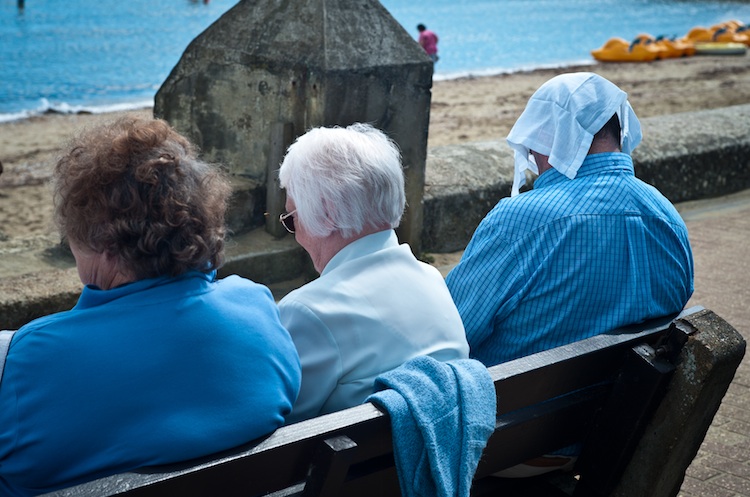
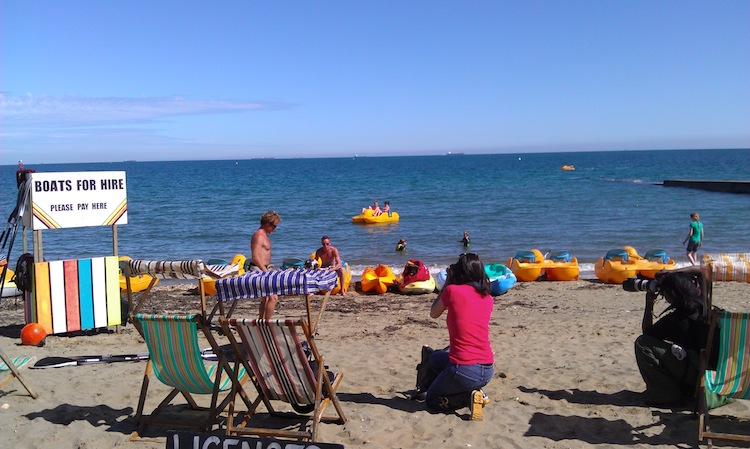
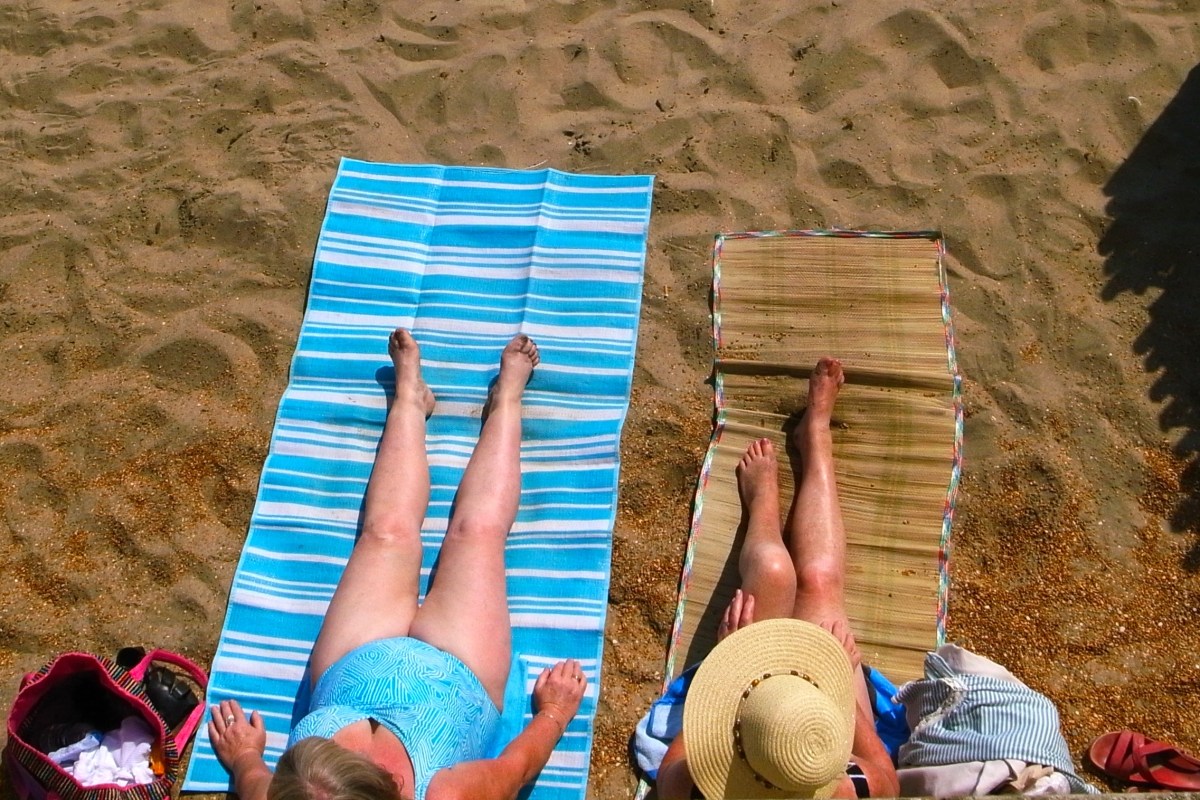
The weather had been kind to us last weekend. The SLOW photography group drove south in two cars to Lymington and sailed across The Solent to Yarmouth, on the north west of the island. We spent the night in the 1930s style Shanklin Hotel. It was after all August, the height of the British summer, but the beaches in Shanklin and Ventnor weren’t even crowded.  The local deckchair attendant on Shanklin beach was rather perplexed and told me that usually, by mid-August, the weekends are overcrowded with beachgoers, and  he would have rented out all his chairs. Today, he spent time playing by the shore with his daughter and grandchild, a cute little blond.

The group spent over 2 hours walking along a stretch of seafront about 500m long, lined with tea shops, amusement arcades, gifts shops, cafes, and those that sell ‘swimming paraphernalia’, like blow up crocs, rubber rings, lilos, flippers, and colourful beach-balls.

I brought my trusty Rolleiflex along to shoot a couple of rolls of 120 film and since it was a SLOW approach, a lot of time was taken up with observing the crowd, chatting to some, and making contact with potential portrait sitters. Andy chatted to Joe, the friendly pedalo-minder, and we got some portraits of him posing in front of his hire sign. Katalin shot a series of Joe kicking a beachball.
Late afternoon, we headed out to the south cliffs of Compton Bay, and waited for the glorious sunset. Fernando, the conquistador of the sweeping long-exposure ‘guru’ demonstrated how to shoot a dramatic sunset, with graduated filters, bubble-levels, a sturdy tripod, and most of all, vision and patience. Vasuki made sure she had her 2X and 4X ND filters also, and managed to smooth out rippling waves in rock pools with her 5D Mark 2, and made friends with a huge dog.

The next day, we decided to pay a visit to Dimbola Lodge, in Freshwater on the south-western coast of the island. This is the childhood home of Julia Margaret Cameron, the celebrated Victorian portrait photographer. There is a permanent museum there and a revolving exhibition. On the way we stopped by Ventnor esplanade. The beach was still quiet at 10:30am.

An elegant and handsome retiree with wavy silver hair sat enjoying his coffee in a beach front cafe in Ventnor, obliged to have his portrait taken by the group. A hip surfer dad and his kids hung out in a fully restored red VW camper van also allowed us to photograph the interior of his ‘pride and joy’.

From Freshwater, we proceeded to hike towards The Needles, the most visited spot on the island. These are craggy sharp stacks of chalk that rise out of the sea on the southwestern most point of the Isle of Wight, used by sailors and shipping as a reference point. The view is breathtaking.


The IOW has a certain unspoilt charm about it. We found the locals friendly, the food to be of a very good standard, and the scenery simply outstanding. The weekend went by too quickly, and being an exercise for restraint, thoughtful photography, we found ourselves challenging our observation and compositional skills often.

Who’s up for Blackpool next?

SLOW in IOW

© Steven Lee 2011

We will be visiting and photographing the seaside towns and coastal areas of the Isle of Wight this coming weekend in what I term as SLOW Photography.  Bringing back the skill of observation, composition and pre-visualisation techniques back into our practice, instead of the ‘click, chimp, and delete’ style we are so used to nowadays in digital photography. Its August, the peak of the British Summer, so expect lots of bright and colourful beach images and dramatic landscapes.

We hope to pay a visit to Dimbola Lodge, the home and museum of one of Britain’s celebrated Vitorian photographer Julia Margaret Cameron in Freshwater.

More later.

CUBA series : Yank Tanks

No photography trip to Cuba would be complete unless there are some photographs of old American cars, one of the main attractions of Havana. Chevys, Fords, Lincolns, Cadillacs and various other forms still continue to roam the streets despite some of these machines having gone way past their sell-by dates. We came across some fully restored fine examples of these 50’s glories, and also some really clapped out ones. Most, if not all have had their innards replaced by more modern Japanese or Chinese truck engines and their attraction aren’t to be missed. Mainly used as taxis to ferry locals, some carry tourists for sight seeing trips around Havana. Kinda cliché to photograph, but not unlike visitors grabbing shots of black cabs and red phone boxes in London. Here are some casual snaps of these Yank Tanks. I just love their bright colours amongst a back drop of crumbling earthy buildings.

This slideshow requires JavaScript.

Yank Tanks by Steven Lee, 2011

CUBA series : Cubanos by Andy Craggs

At the dancehall, Cienfuegos, Cuba © Andy Craggs, 2011

Andy decided to tint a series of portraits in selenium to create a moody and enigmatic feel for his ‘Cubanos’ subjects to avoid being derivative. He photographed mainly with a 80mm F1.2 Nikkor AI manual lens on his D3 body, providing incredible small depth of field, which is his signature style. These intimate portraits were made on the streets and alleys of Havana, Trinidad, and Cienfuegos.

This slideshow requires JavaScript.

Cubanos by Andy Craggs, 2011

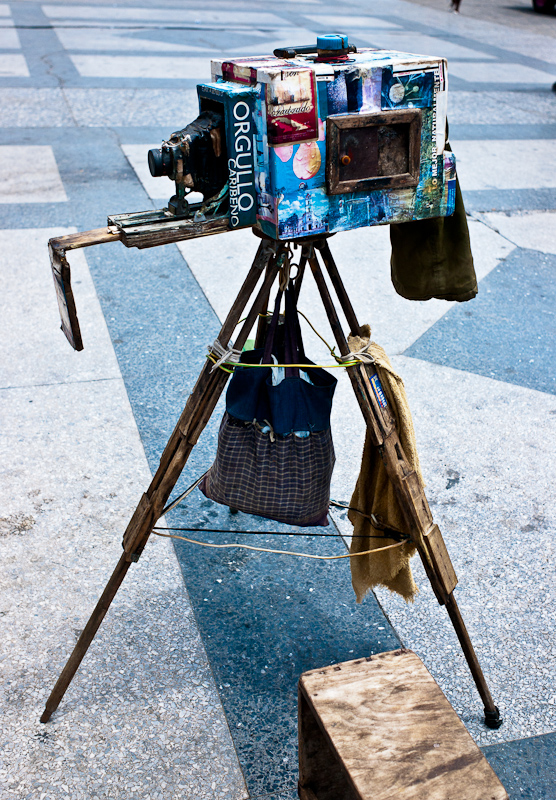
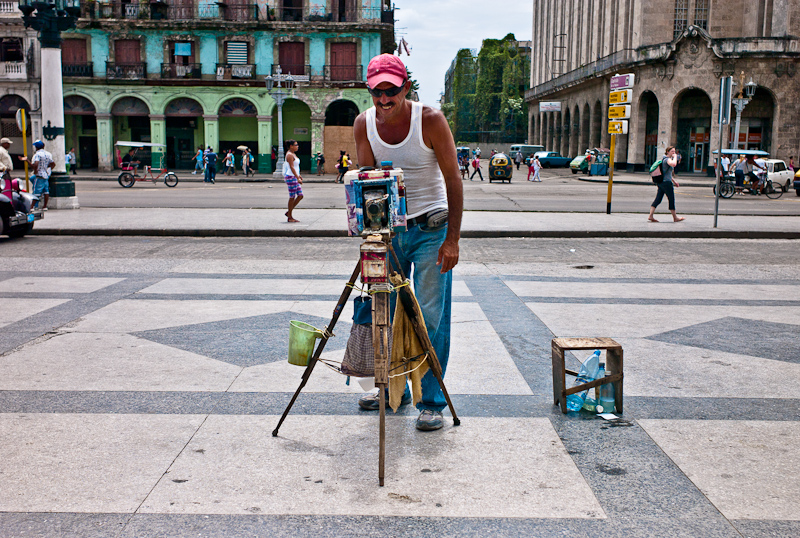
I had my portrait taken…by a 111 year old box camera!


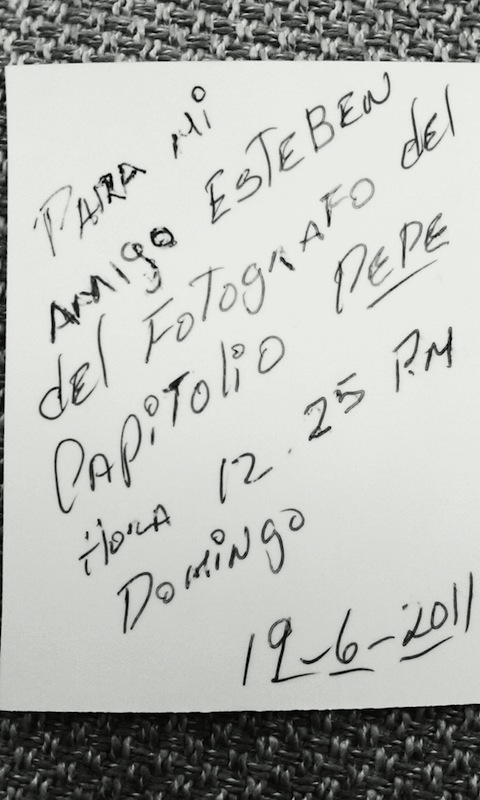
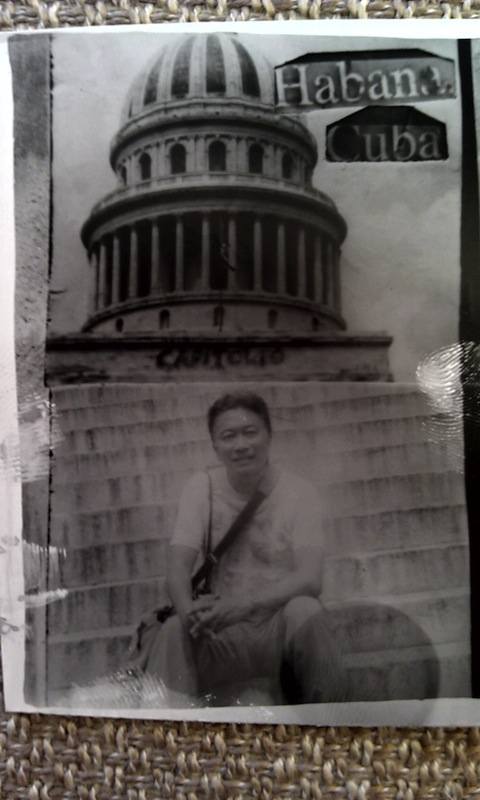
On the last Sunday before our group left Havana, I met Pepe on the steps of Capitolio, the state building in Central Havana. I was intrigued by the contraption of a camera he was fiddling with, basically, a large box, covered by pieces of paper torn from magazines, on a wooden tripod. A quick smile and a “Ola, and we chatted in English. I discovered he was operating his grandfather’s 111 year old camera obscura, or box camera, ..and…he can take a photo with it, and produce a pretty instant print for me in less than 5 minutes..slightly wet print, mind you, but a REAL silver gelatin print and not a Polaroid! He went on to show me how he can process the paper inside the box after he had exposed the paper by opening the ‘shutter’, a plastic bottle cap for 1 second from the cheap scratched lens at the front. You see, there are two small shallow trays inside the box, which processes and washes the print, then he slides open the tray from the back of the camera, and continues to fix it in another tray! Finally he dunks the print (still a negative image) into a bucket of water to rinse it.

Watch the birdie!

That’s not all! Because the first image is a negative print, he then proceeds to re-photograph this print by placing it onto a bracket in front of the lens. Suddenly, his portrait lens converts into a macro-focusing one. Pepe then adds some ‘old trickery’ to the print by sticking a fake Capitolio dome above the portrait, sticks some reversed “Cuba” and “Havana” letters and voila! (He calls this Photoshop) A perfect portrait of me sitting in front of the Capitolio is completed.

Another few minutes pass by, and he is busy processing the final ‘positive’ print inside the camera and hands it to me still wet. All the show for 2 CUCs!

Simply amazing stuff. I got Pepe to do our group photo after that.


CUBA : MALECÓN series no.4

Photo © Bruno Couck 2011

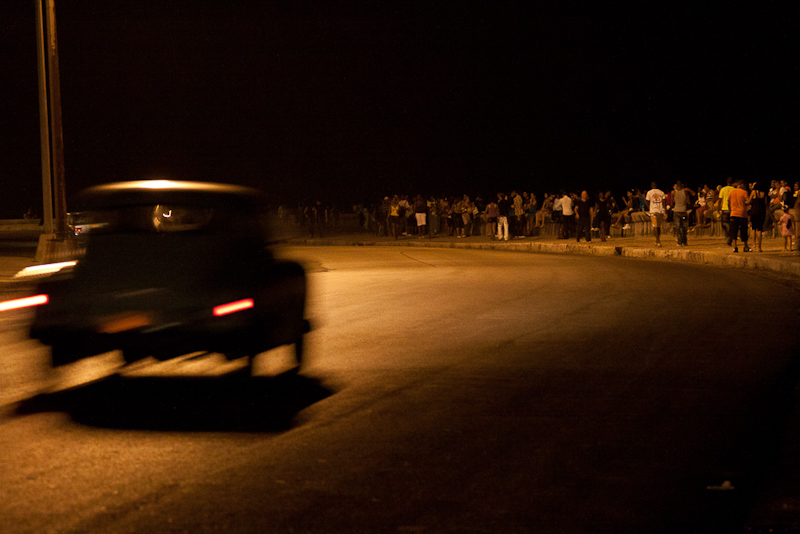
The fourth instalment in the Malecon series comes from Bruno Couck. Bruno typically photographs architecture and abstracts, and is beginning to enjoy street portraits and close quarter photography in a new light in the streets of Havana.

“Shooting in low light conditions favours blurred images, which in turn give a very good impression of how lively the main Havana sea facing road is on Saturday nights. People running, walking, strolling over from one side to another, from a group of friends to another, from a silent area to one where some music is played…

Malecon, probably the most densely populated place in Havana at the weekend!”  ~ Bruno

This slideshow requires JavaScript.

 Night movement on the Malecon © Bruno Couck 2011

CUBA : MALECÓN series no.3

Photo © Steven Lee 2011

The Malecon intrigued me somewhat, after seeing many photographs by well-known photographers in the past, and now that I was finally arriving on this ‘hallowed’ stretch of concrete I was excitedly keen to make some images that, for a first visit, meant something greater for me than mere snaps.

It was during a drive-by the previous Saturday evening in a Cubataxi, one of the yellow Lada-state taxis, that I noticed the amazing night scenes along the  seawall, with literally thousands of Cubanos mingling, chatting and perching on the walls late at night. I saw young teens, older locals, families with their kids, people swigging and sipping rum from bottles, playing guitars, stalls selling snacks and of course the ever watchful Havana policemen and women, who do such a great job in keeping the peace, thus there are hardly any reported thefts, robberies or crime.

This Saturday night, we cruised the Malecon in a clapped out faded pink 1950’s Ford. Our driver, a huge beefcake of a man, found a convenient spot to drop us off as we promised to return in 30 minutes or face long walk back to the hotel.

The 6 of us headed off and along the Malecon, split up into ones and twos shooting our own series. I shot with a compact Fujifilm X100, which I had been using practically the entire trip, with the ISO cranked up to 400 and using the built-in flash. I also shot stealthily in available light at ISO3600 in a few instances, when I needed to preserve the moment.

Here’s my take..

This slideshow requires JavaScript.

CRUISING THE MALECON by Steven Lee

CUBA : MALECÓN series no.2

Photo © Keng Fun Loh 2011

Another take of the Malecon series by Keng Fun Loh sees a totally different and rather voyeuristic approach. Fun simply decided to shoot in available light (which in some parts wasn’t available at all!) composing a shot every 6 paces along, at a fixed distance away from the sea wall, with a 50mm lens, and making full use of the Canon 5DM2’s high ISO capability of 6,400. Focusing was pretty touch and go in complete darkness whilst, some frames were lit by the headlights from passing cars.

These photographs capture the honesty of the moment, candid and unobtrusively depicting the locals hanging out, unperturbed by a sniping visitor.

This slideshow requires JavaScript.

Take Six on the Malecon © Keng Fun Loh 2011

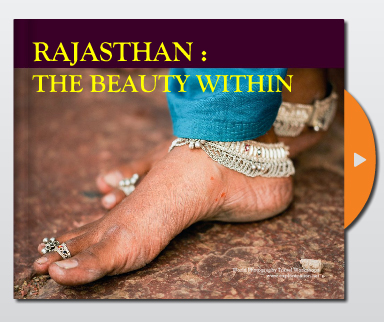
RAJASTHAN : THE BEAUTY WITHIN – A Blurb book

Explorenation’s biggest book yet is now available on Blurb.com

A 200-page, 12in x 13in monster of a book! You’ll need a bigger coffee table! Hardback and in full colour.

RAJASTHAN : THE BEAUTY WITHIN is a compilation of the group’s photographic tour to the region of northern India covering Delhi, Agra, Jaipur, Pushkar and Jodhpur, from 10 -21, November 2010.

I had a great time reviewing everyone’s photographs and recounting some hilarious moments whilst preparing the layout. It was truly a awesome trip despite being rough at the edges at times. Thank you to all who came along and whose works are represented in this tome!