 Iban fighting cock, Nanga Sumpa, Batang Ai, Sarawak interior, 2009
Kung Hei Fatt Choy

Iban fighting cock, Nanga Sumpa, Batang Ai, Sarawak interior, 2009
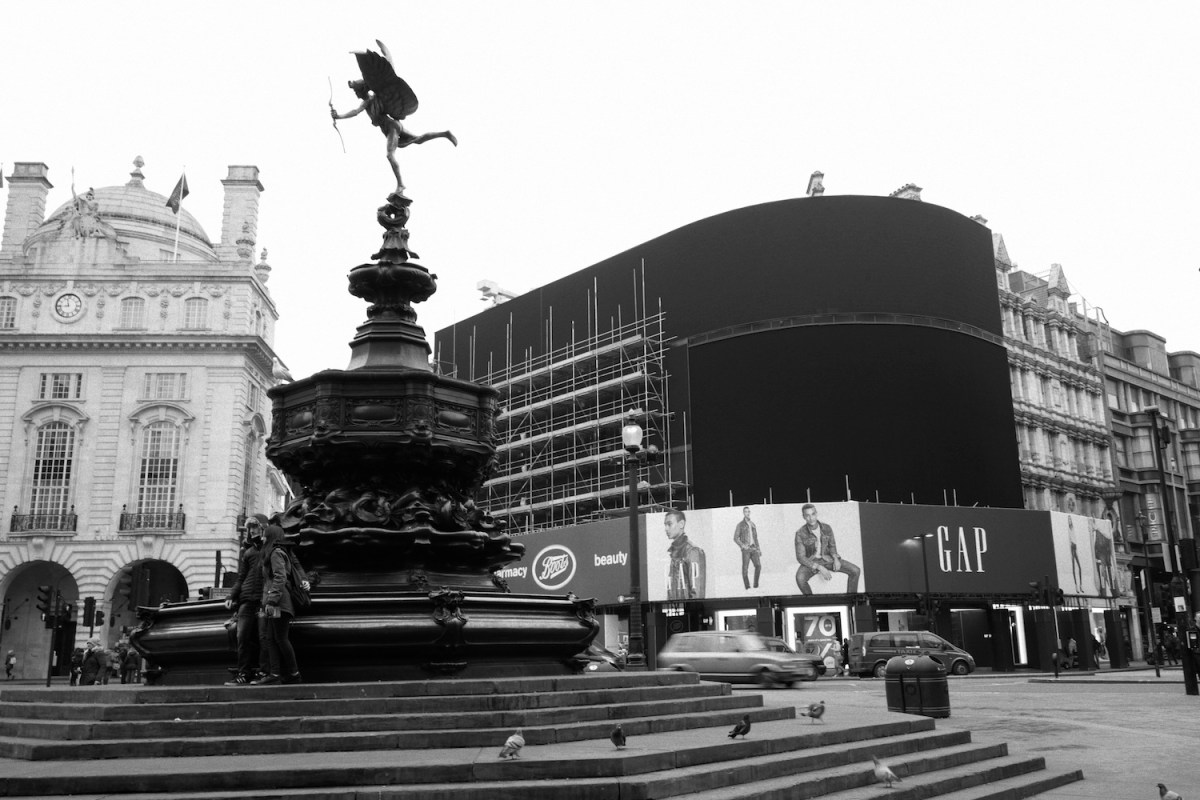
Last week, the lights went out in Piccadilly Circus. The giant multi-display screens that have lit the circus ever since the very first billboard advertising Perrier in 1908, were switched off for the dismantling and installation of a new single ‘state of the art’ digital billboard – apparently the largest in Europe.
The screens have only been turned off a handful of occasions before – for the duration of the Second World War, Winston Churchill’s funeral in 1965 and Princess Diana’s funeral in 1997.
Expect something amazing in the Autumn.
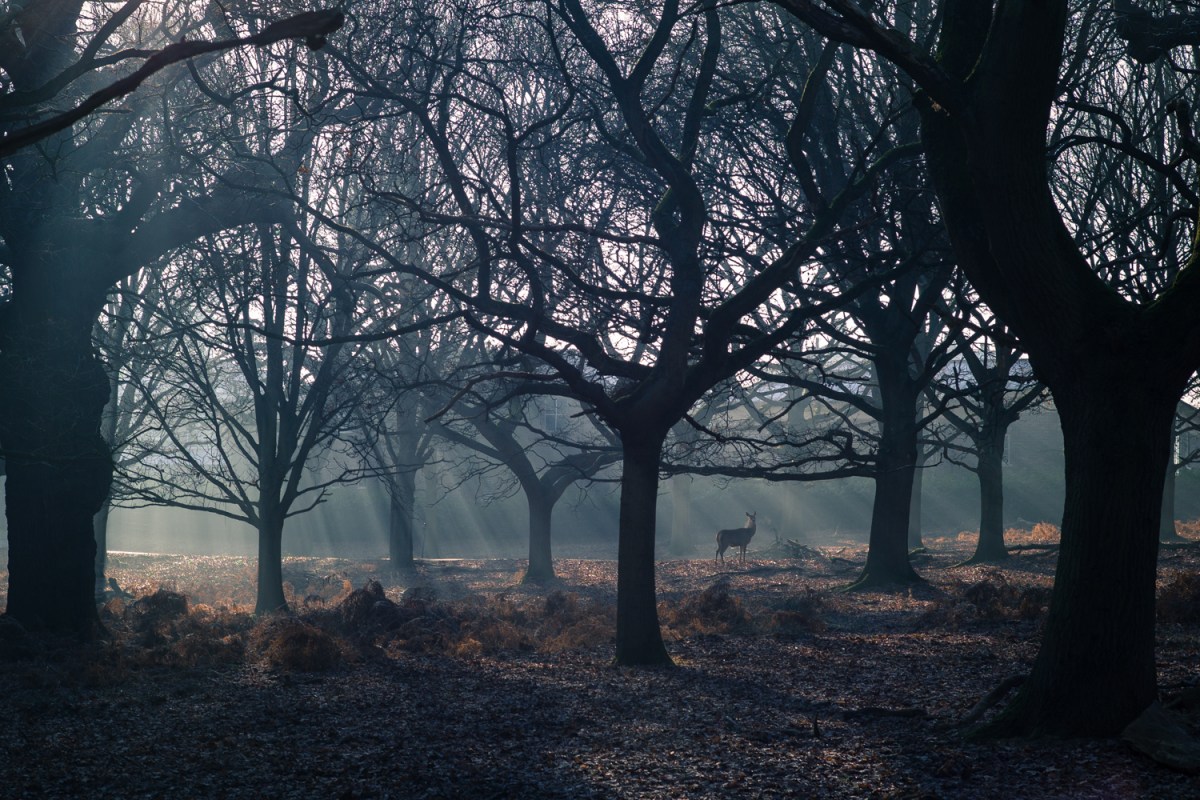
This is it! My lucky shot this morning whilst walking the doggie in Richmond Park. It was cold and frosty and the low winter sun was streaming down in between the skeletal trees. Grabbed four shots in succession before this young deer bounced away into the woods. This was the the sharpest image, taken with an ‘unprepared’ 50mm lens. Cropped slightly.


Noriko Hayashi is a Japanese photojournalist working mainly on social, gender and human rights issues. I first met Noriko at the Mt.Rokko International Photography Festival in Kobe, in 2015 where she presented a bizarre story on the kidnapping of brides in Krygyzstan called Unholy Matrimony.
She has just published her second book, The Prayer of the Yazidis – a compelling compilation of photographs and interviews of the Yazidi community of Iraq, who fled their homeland following the siege and massacre of hundreds by ISIS (DAESH) fighters in August 2014, and also photographs of some refugees and their families resettling in Germany.


Firstly, the book itself. Thread sewn and case bound, it has no hardcover or spine. There is a translucent plastic gate fold dust jacket protecting the internal pages, and neatly separating the main photographs section and the text. It’s kind of awkward to turn the pages as the loose jacket’s texture is slippery and separates entirely from the book itself.
Nonetheless, when you open the book and skip pass the Japanese Prologue and aerial map (I don’t read Japanese, unfortunately) the images hit you, hard.
Anyone expecting images of front line fighting, death and destruction and war torn streets will be disappointed. The images go deeper than expected and show shattered dreams, loneliness, isolation, trauma & identity, contemplation and mostly, hope. It portrays the stories of mainly young Yazidi women who escaped from the clutches of their Daesh/ISIS captors who abused and mistreated them, their families and follow their resettlement in Germany.
Although the photographs themselves demand careful viewing, for me, the strongest part of the book is the text section – the personal testimonies of the individuals recounting their experiences from the day ISIS militants invaded their homes, villages and towns, their incarceration and separation from the men, their forced slave work and physical abuse, and their escapes.
Their stories are heart-wrenching and tragic. Women were separated from their men. The men were shot. The women taken as slaves, tortured, married off and raped. Their escape from ISIS were the only highpoint of their accounts.
I feel compelled to reproduce one testimony from a girl named Nadia.

“I come from Kocho, a small village surrounded by Muslim villages.The house where I live with my family was built out of clay in 1952. We had 130 sheep. I used to do things like putting on makeup and going to wedding feasts, walking to the high school together with my friends, or when spring came, going to picnics in Mt. Shingal. My dream had been to become a history teacher.
When Daesh invaded my village the militants gave the order to hoist white flags on the roofs. The villagers were locked up in their houses. During this time the family tried to encourage each other and prayed to God. On the August 15 Daesh gave orders that all villagers go to the village school. I put on a black dress and a pink jacket and left the house. When we arrived in the school, some 700 male villagers who had gathered there were taken away in Daesh cars. I stood by at a window on the second floor and witnessed the men being rounded up and shot on a vacant land. Six of my nine brothers were murdered there and the remaining three managed to flee despite being seriously wounded.
We, some 150 young women, were brought to Mosul on buses. There were already some 70 Yazidi women in the building were we were taken to. A woman said to me, “the women who come here are being sold and married off to the Daesh militants”. Daesh militants came every evening, They chose women and took them. On the fourth day a militant took me to his house and ordered me to remove my clothes. From that day on I was sold and raped by various men. Sometime in November, taking advantage of an unguarded moment, I escaped from a militant who lived alone. After two hours I found a house and asked for help. Although the house belonged to Muslims, they did not support Daesh. They were a very kind family. They took me under their care and continued to hide me. A week later one of the family’s sons brought me to the frontline between Daesh and the peshmerga, near Kirkuk. My younger brother came to get me there. Thirty-eight of my relatives are still missing, including my mother and brothers. ” – Nadia, born 1993, Kocho village, Iraq
These testimonials are printed in English, Japanese and German.
This book does not attempt to patronise the plight of these Yazidi women and families or portray visually the horrors of conflict. Even so, the horrors we read and hear about in the news in 2014/15 – names like Kirkuk, Mt.Shingal, Mosul – and terms like “rape, mass killings, executions, massacres” become real from the photographs and the testimonies, because these are first hand accounts, from the very people we read about. The several testimonies printed in this book tells of further harrowing sufferings, beatings and torture endured by the victims, and each account is a personal tragedy of sorts.
There is much empathy in Noriko’s photographs with her subjects. Many images show only glimpses and fleeting moments – personal items, places, objects, found photographs – all combine to paint a picture of lost hope.
The Prayer of the Yazidis is available from Amazon Japan , 223 pages, Published by Akaaka Art Publishing, Japan.

Bosphorus, 2010
Troubled waters ahead. On the first day of the new year, a gunman dressed as Santa Claus entered a nightclub on the Bosphorus and killed over 39 people, as hundreds celebrated the New Year. There’s an unspoken protocol in the UK that the Brits do not normally discuss politics and religion at dinner tables, and presumably Brexit also.
However, as I see it, these subjects define who we are and how we exist – politics have to do with every facet of our modern connected lives, from the price of oil to the car we drive, and sadly, our day to day security. Everything is connected. Europe is currently facing an unspoken crisis and this will only deepen in the coming months as Britain prepares for Brexit and the EU sees several General Elections in 2017.
We scorn at the opinionated and so-called experts, but I fear those who have no opinions more, as you don’t know where they stand.
 explorenation.net ~ photography posts, workshops, writings and thoughts by Steven V-L Lee
You must be logged in to post a comment.